
Brain Health
Unpacking the Latest Insights and Tips
Transcript
[BEGINNING OF RECORDED MATERIAL]
Kevyn: Hello. My name is Kevyn. I am a First Nations advocate with Dementia Australia. For more than 50,000 years, we have come together to trade knowledge, to learn and to teach. Today, we join to keep up that tradition. So, with that in mind, we now pay our respects to the Traditional Owners, to Elders past and present, to those First Nations people joining us here today.
Hamish: Hey, Jim, I know you run a pretty tight ship with your diet, your exercise, your sleep. You see the trainer all the time. You're swimming your laps. How often are you thinking about your brain health?
Jim: Yeah, probably not as often as I should have, if I'm honest. I've always been pretty disciplined with the physical side of things, training, eating a really good diet, doing my best to get as much sleep as possible. And I used to think that was enough, but it's only when something starts to go wrong with your brain that you realise it's everything. And it's your identity, your relationship, your independence. So, now I think about brain health every single day; not out of fear, but because I understand just how important it is to us.
Hamish: Do you notice the way the things that you are doing for your brain health are helping?
Jim: Yes, I absolutely do. I know if I'm spending time talking at length, I feel stimulated from that if I'm having good conversations with people. But I only have a limited amount of energy. So, if I've got a certain amount of things in a day that I've got to do, I have to proportion what I can give to each thing, and that could include even a great chat with a friend. If I have a great in-depth chat, like, my brain's gone. Like the battery's been used and the charge is low. Okay.
Hamish: So, are you saying that podcasting is helping you?
Jim: I think so, I really do. And my family thinks so, too. Because I've had so many things that I've been doing, I think it sort of stopped me thinking about all the darker side of what could potentially be coming. And it sort of kept me very active and interested in, you know, moving forward.
Hamish: Interesting.
Jim: And also, I'm exploring an area which is, marries up with this. So, I've been really fortunate, you know, to meet lots of people, hear their stories, get to know you.
Hamish: Happy to help, Jim. So, our brains are, of course, essentially who we are. Whatever you're thinking, feeling, deciding, paying attention to, it's all up to the brain. We all know exercise, sleep, good nutrition can help keep our brains healthy. But there's some fascinating new research that we're about to explore, showing that there's more that we can do to keep our brains in shape, for longer.
Jim: I love it. I can't wait for this. I want all the practical tips and things that I can do right now which will help to keep me sharp.
Hamish: We'll get to that shortly and later, you're also going to meet Janet, who's using creative writing to give her brain a real workout after an Alzheimer's diagnosis.
Jim: This is Hold the Moment. I'm Jim Rogers, and I'm living with young onset Alzheimer's.
Hamish: And I'm Hamish Macdonald, part of a clinical care tool for Jim, making podcasts! I cared for my dad who lived with Lewy body dementia and Parkinson's disease. Recently, National Geographic released a documentary. It featured Chris Hemsworth and his dad. It was called A Road Trip to Remember. It's about the two of them taking a really personal road trip together as they confront his dad's Alzheimer's diagnosis. Did you happen to catch it?
Jim: I absolutely loved it, Hame. Yes.
Hamish: You're planning a road trip any time soon?
Jim: I would love to do a road trip. Yeah, they even recreated their original family home, which is such a cool idea.
Hamish: Dr Suraj Samtani was part of that documentary, and is a clinical psychologist at the University of New South Wales' Centre for Healthy Brain Ageing. His research shows that meaningful social connection is like fuel for your brain, and being isolated can actually hold it back. Welcome. Dr Suraj.
Jim: Yeah, a big welcome to you.
Dr Suraj: Jim, Hamish, thanks for having me here.
Jim: So, Suraj, can you tell us why is brain health so important, and what does it really mean to look after your brain?
Suraj: We think of brain health as one of the key indicators of living a healthy life for everyone, and we should be looking after our own brain health throughout our life. And not just thinking about avoiding dementia, which of course, we should be doing, and working on keeping our brain healthy and active, regardless of whatever else is going on in our life. It's so important for us.
Jim: So, are there ways that we could be damaging our brains without even realising it? Right now, are the things we could be doing?
Suraj: Jim, there's a lot of things we can do for our brain health. The key here is that it's never too early, never too late. We can always boost our brain health by doing the right things for our minds and our bodies. We know from a recent report on the risk factors for dementia that we should be doing regular exercise. We should be eating well. We should look after our senses, our eyesight, our hearing, but also looking after our bodies. So, a good diet is definitely really important, and so is exercise. Because all the health conditions we hear about, whether it's diabetes, whether it's hypertension, all of these things increase our risk of dementia. So, staying healthy is our main message, really.
Hamish: Suraj, I know with most things we can kind of tell whether we're healthy or not. Like, if we get a cold, we know we might be run down. If we put on a bit of weight, we know maybe our diet's not great. How do we know if our brain is healthy?
Suraj: Well, it's in our memory and our thinking that we see changes. When we start to notice that we're starting to find hard to do the things that we used to do, that's a sign that we need to maybe go have a chat with the GP or doctor. Maybe go see a memory clinic or see a geriatrician. What they should be doing is doing a memory test, and they might also ask for some brain scans, and together, that paints a picture of where our health is at over time.
Hamish: But I suppose what you're talking about is brain health throughout our life, not just when you know something is going wrong. So, how do we know whether we're doing things that are good for our brains?
Suraj: I think the key for that is to know that you're looking after your health, in a broad sense, by staying physically, mentally and socially active. And a lot of the work that I do shows that being socially active is really a key for living a long life without health conditions. So, for example, we know from the Harvard Study of Adult Development, the world's longest running study, that people who stayed socially active, they delayed the start of health conditions like diabetes, heart conditions, and push those conditions to 10 to 15 years later just by being socially connected.
Jim: So, you say we need to be socially connecting with people, but how would you sort of summarise it into how much social interaction is good for us? How much do we really need?
Suraj: That's a great question, Jim, and that's something that I spent the last six years trying to answer. Luckily for our listeners today, firstly, thank you for listening in. You're going to walk away with an answer to this question. So what we did is, we did a project on social health and brain health, and we tried to figure out what is the recipe for good brain health, in terms of what social ingredients should we be adding, and just how much of each ingredient do we need. And so, we looked at all the risk factors for dementia and accounted for them. We had 40,000 people from all around the world followed up for up to 15 years, and even after accounting for all the risk factors, we found that very specific social activities are extremely protective. So, not only do they reduce our risk of dementia by half, they also put the brakes on the speed of cognitive decline. And there were two key ingredients. One, seeing friends or family outside the home as often as possible. And the second one was having someone to confide in. Talking to someone we trust when we feel stressed, that was so important.
Hamish: So, your great grandfather had dementia. How's that shaped the work that you're doing?
Suraj: Hamish, that's the main reason why I do this research. So, when I was six and we were living in India, in Mumbai at the time, he was a priest in the community. Even at the age of 90, he'd go to people's houses, and he would do prayers for them if they'd had a baby, or bought a new house, things like that. And he walked for an hour or two a day. He was so active. But then my parents bought a house in a new suburb, and he was so attached to me. You know, we played cricket with like a child's cricket set every day. He moved with us. And, you know, stopped walking, stopped volunteering, and we saw within six months, he couldn't recognise us anymore, and he passed away another six months later. So that experience as a six year old was really scary for me. I didn't understand why he didn't know who I was and I thought there was always something really powerful about how he had been socially connected until that point. And then, yeah, that's why I do this work now.
Jim: Suraj, you were a scientific consultant on the National Geographic documentary with Chris Hemsworth and his father. In the film, you took a road trip back to where the Hemsworths revisited their family home. In fact, they recreated it and got those memories going. How does that sort of thing actually help the brain?
Suraj: Jim, it definitely does. We know that reminiscence therapy is a very effective intervention. It helps boost cognition, but only as long as we keep doing it. We know the effects last for about three to six months. It depends on the person, but there's different levels of it. One way would just be to ask people to tell you about their life. Another way would be where you ask them about the challenges that they've overcome in their life. And we try to use that approach because that builds a sense of mastery, of control, of identity, of confidence. And that's the main thing we wanted for Craig, because he had really withdrawn from interactions. And if you've watched the documentary, you'll see he's so funny, and doing this really helped him to come out of his shell and start talking to other people, which was another bonus.
Hamish: So, is that what reminiscence therapy is? Like, could you, for those listening that don't know much about it, how do you describe it?
Suraj: I describe it as exercising the brain. We're exercising going back to old memories, because every time we replay, relive those memories, it strengthens that network in the brain, and it solidifies it even more so that it's a little bit easier to access next time.
Hamish: So, in the Hemsworth documentary, they obviously recreated a family home. Not everyone can go and do that. Are there simple things that people could try? Are there examples that you can speak to where someone's tried something quite creative that's actually worked?
Suraj: For sure, Hamish. I think it's actually really simple, doable at home for anyone. So, like Jim said, old photographs, that is a really quick and foolproof way to do this. Get out your old family albums and talk through different events in life and go through different memories, especially key milestones. They're really important for our sense of self as a person. But also, one thing I think works really well with this is music. You know, putting on music from the past is a great way for our emotional system in the brain to switch on again, and memory is only stored after it's highlighted by emotion. So emotion is a really powerful way to unlock a memory, and nothing does that like music or smells.
Hamish: What about just talking about old times? Like, my dad had a friend from school that used to visit him when he was living in residential care, and they used to talk a lot about their days at school. Is it, can it be that simple?
Suraj: It is actually that simple. Recently, I was doing a study to reduce loneliness in residential aged care and at Leigh Place, which is aged care in south west Sydney, and there was, there's this really amazing woman there who would just greet everyone with the warmest smile, give them a hug, and her thing was about cooking. She said to me, Look, I only did up to year four at school, but I am going to make you some really amazing Croatian food. So, we'd go in there. Every time she'd have something ready and it just reanimated her. And she, we'd end up watching YouTube videos of how to make these traditional dishes, and she just lit up. It was just beautiful to see her confidence came back, and she would make these large pastries filled with walnuts or onion and potato for the entire floor where she was living, and just everyone looked forward to it.
Hamish: What should you do if you are wanting to keep your brain healthy? You don't necessarily have a dementia diagnosis, but you're interested in this. It isn't just about Sudoku, is it? So what else can you do?
Suraj: Well, it's not just about Sudoku, as you said, Hamish. I think the key is to stay physically active. So, for people we tell them, Look, try to do at least two strength training sessions a week. Try to do at least 30 minutes of walking or light to moderate activity every day, if you can. And mentally, it can be anything that links you to things that you enjoy doing that exercise the mind. It's not just about crosswords or pseudo code. It Could be playing games. It could be knitting. It could be cooking. It could be writing, painting, anything that involves the brain.
Hamish: Dr Suraj, thank you very much.
Jim: Thanks, Dr Suraj.
Suraj: Thanks, Jim. Thanks, Hamish.
Hamish: After hearing Suraj talk about connection, it sounds simple enough, but in real life, staying connected is not always that easy. Finding the right people, the right spaces, it's not always straightforward.
Jim: And that's where places like Memory Lane Cafe come in. It's a monthly meet up run by Dementia Australia, designed so people living with dementia and their families and carers can catch up and make new friends in a community space.
[Recording from a Memory Lane Café event]
Hamish: We're at the meet up in North Lakes, in Queensland. Kasey's hosting today with a team of volunteers. The room is already buzzing.
Kasey: I'm Kasey, and I'm actually the Memory Lane Event Coordinator for Queensland, for the cafe program. Being in the role now for over 12 months, the cafe program is really a platform for people to come together, of shared experiences, albeit at different stages, and just make connections with others who are on a similar path.
Ray: My name is Ray. My mother used to call, mother calls me Raymond. That's mainly when I was in trouble. Other than that, it's Ray. And I've been coming here for about, three or four times I've been here. I would have liked to have been here more frequently, because I really enjoy coming here and I love the people. Well, I can't come over anymore. My wife's got bad dementia and Alzheimer's. Her name was Nancy. We've been married for 63 years, and yeah, so and I miss her. But I enjoy coming here. I haven't got dementia myself yet. And for me, I am lonely. I've gone through the guilt process and everything with having to put my wife into a nursing home, because we had a wonderful life together. And I just feel that the people here, it's very comfortable in here in this environment, and I enjoy coming.
Rose: Hello. I'm Rose, and I care for my husband, Raymond, and we've been coming to Memory Lane now for nearly two years, and the difference that it has made in our lives is really good. And he's made some friends here as well, people who live close to us. We try to mix when we come in, we sit on a different table each time, so that's good. And I have a couple of favourite dear little ladies in here, and I bring them in flowers from my garden. And it's a way of connecting with them, and they feel comfortable in this environment.
[End of recording at Memory Lane Café event]
Hamish: So Jim, what really stands out to me is just how simple it can actually be to create that kind of connection - sitting down for a cup of coffee, having a yarn, a few laughs, maybe. Suddenly you're doing something genuinely good for your brain. I guess it's, sort of, sometimes we overthink things a bit, don't we?
Jim: Yeah, for sure. Like Dr Suraj mentioned earlier, social connection is one of the biggest boosters for brain health, and at places like Memory Lane Cafe, you can actually see it working.
Hamish: But socialising isn't the only way to keep your mind active. For Janet, who we're about to meet, it starts somewhere a bit quieter, with writing.
Jim: Ah, yeah. And I'm really keen to hear about this, actually, because I've been working on a book.
Hamish: You've been working on a book?
Jim: Yeah. Well, it's actually about my life, and it has a little bit of an interesting journey, but it's been a really interesting experience. I've been doing it with my daughter, Millie. And it's been a great experience, the entire family, and it's due out in September, I think.
Hamish: And so, is this the whole life story? What is it?
Jim: Yes. Pan Macmillan approached us to do a story about my whole life, which is, in their words, quite extraordinary. So we shall see. It's on its way.
Hamish: Are you nervous?
Jim: I am. Yeah, I'm very nervous and anxious. I never, ever thought I would be writing a book. But, never say never, Hame. There you go. You never know what's gonna happen.
Hamish: I can't wait to read. Has it got more secrets in it?
Jim: No! It'll be interesting.
Hamish: All right, maybe you've already been following some of Janet's advice about brain health, so let's find out a little bit more.
Jim: Janet's in her 70s and was diagnosed with Alzheimer's four years ago. And she started her career as a teacher, but writing was always her real passion. In her late 50s, Janet went back to university to complete a PhD in creative writing, and since her diagnosis, she's run writing workshops for other people living with dementia, and she's helping them find their own voices.
Hamish: Janet, Welcome to Hold the Moment.
Janet: Thank you very much for having me.
Hamish: When we talk about looking after your brain, a lot of people think of different things you can do, puzzles, activities, memory games, but for you, it's creative writing.
Janet: It is indeed, yes, yes.
Hamish: What do you think it does for your brain?
Janet: Mostly, I don't like what I've written.
Jim: We've heard you're quite good.
Janet: I'm on a bit of a journey whenever I write. Apparently, when I was about three, I tried to stick together, with glue, lined paper and write a story for my mum, because she taught me to read, so I wanted to give it back. So, I feel like I'm doing something for myself, but also for other people. I'm enhancing my life. I'm doing something that I've loved since I was a tiny girl.
Jim: You haven't always been a writer. Tell us a little bit about your backstory, because you'd always wanted to be a writer, but that didn't happen till later on. So what did you do prior to that?
Janet: I was a school teacher. The same mother that taught me to read at three said, Don't be a writer, be a school teacher. But then I went on and got involved in women's education in TAFE, empowering women to return to the workforce. Loved that. Just like that, there's a feminist heart beating within, and then went to Flinders University and got a PhD in creative writing and looked at writing as therapy.
Hamish: Why do you think writing works as therapy?
Janet: There's probably better people than I who've done more research on it, but I think it, it probably sparks different parts of the brain for different reasons, in different ways. And, I think that's why the people, and there haven't been many so it's not a study, and not a valid study, but the people I've worked with to write stories who've got dementia of various type, various kinds, they can achieve something and feel good about it. And it's the feeling good, I think, that I'm not sure whether I answered the question, but that's why.
Hamish: And so, has that background, is that knowledge, has that shaped what you've done since your diagnosis?
Janet: I thought I'd get this in somehow. When I got the diagnosis, I said, I'm not sitting in the corner with a blanket over my knee. So, I did want to investigate going to people and talk about creative writing, and I got very, very lucky. a young woman from Perth WA, Althea Gordon, had done something similar with theatre in her mother's rest home. Yeah, and she actually had, Althea had lots of people living with dementia doing lots of roles within that theatre production. And when I met her online through Dementia Australia, when I told her that I was a writer, she said, why don't we work with people who are living with dementia? Can they write? And I said, I can't see why not. So, we put together a program. We put together a fund request from Dementia Australia, which they very kindly helped us with. I went over to Perth to do the first creative writing. There were people in the room who couldn't believe they were there. What am I doing here? How did I let Althea talk me into doing this kind of thing? And by the end of the session, they were going away and saying, yes, we'll write this and yeah.
Jim: Was brain health something you'd ever thought about prior to your diagnosis?
Janet: Well, my PhD was in therapeutic writing, so I wrote a memoir, and I researched the origin and development of writing as a therapy, and it has been really researched widely. And yeah, in some detail, that it can help in a whole range of situations with not just dementia, and certainly not dementia when it was first mooted as a possible therapy. So yeah.
Jim: I think the good thing with that creative writing situation is it's ongoing, isn't it? You can keep those creative stories going, so it's good for the brain to be thinking it through and what a potential different ending is? Or it's ongoing.
Janet: I believe in that too, but I think it's also a connection. Very often we sit down with somebody new, a bit like we did last night. Yeah, and you know what? We don't explicitly say, what's your story? But we find ways to get a story out of each other, sometimes subtle and sometimes not so subtle, and we will go away with a story attached to the person we've just met, and if we like the story, we continue to be friends. So, I think that, I don't know, this is going to sound a bit old fashioned, but I think that we sat around the fire in caves and we told each other stories, and it's the one true thing that has lived on. And even Internet and other things,
Jim: There's not enough of it now.
Janet: That's right. And look at you guys. You tell stories, you know, that's how you make a living.
Hamish: Sometimes they make more sense than other times! Janet, you've got a pen pal called Ben.
Janet: Oh yes, yes. My yes, I have.
Hamish: And he played a role, didn't he, in sort of encouraging,
Janet: How did you find this out?
Hamish: People tell us stories, Janet. That's how we connect.
Janet: My friend Ben. Patrick first met Ben, introduced me to Ben.
Hamish: Just explain who Patrick is, because, listeners won’t know.
Janet: Oh, sorry, Patrick's my partner of 15 years or so, and yeah, so he's an actor and Ben's a playwright. And so, Ben moved to Melbourne, much to our chagrin, and he suggested, one of us suggested, there's dementia at work there, that we send each other a prompt every Saturday morning and we post it to each other, the story that we get back. And that was wonderful. That was, I was heaven on a stick for those nearly 12 months writing these stories backwards and forwards to Ben. And we were going to put them together and see if we could flog them around the place somewhere. But Ben got the job, I mean, really! So, I worked on it sort of for a while, and now I've decided to take some of my own stories from that effort and do some more. And also look at stories that I wrote 10, 15 years ago, and I want to get a collection together. It's getting to be time and publish.
Hamish: Do you think your writing has changed?
Janet: I do actually, since the work, the work that I did with Ben, definitely. His feedback was really good. His attention to detail was far supreme to mine, and it was fun to work with somebody who took an interest and could make suggestions and I felt safe with. I've tried to join a couple of groups. They're mostly good, but sometimes you find that they can, they want the story that they would have written, you know, is something that I sort of worry about a bit. So, yeah.
Jim: Do you find that the dementia and the diagnosis has impacted your writing in any way? Or has it encouraged you to write more? How did you find that?
Janet: I think at this stage I'm encouraged to write more. I think when I first got the diagnose 2022, diagnosis, I kind of went, Oh, just continue as is. Now that it's starting to bare its teeth, I'm thinking, I really need to be getting on with this. So,
Hamish: I need to get these stories out.
Janet: Yeah, I need to get these stories out. And even if I don't know once they're out and I pick them up and go, Oh, they're nice. Who did that? I'll be happy. So yeah, I feel as if it has made me more
Jim: Determined.
Janet: Yeah, determined. And yeah, and something like this, like, this is astonishing. I've kind of got to do it now. It's on air. Well, maybe you'll cut it out!
Hamish: Have you got a story you haven't written yet? That you really want to write?
Janet: Yeah, there's the story of a 12 year old girl. She's my granddaughter. She loves to read. We read together when she was very tiny, and her dad, my son, read to her. I'd love to help her write her story, without interfering or being a heavy handed grandmother. But, I would love to be able to see her life unfold and the story of her life, and maybe share that.
Jim: That's a lovely thing, isn't it?
Hamish: The life down the track.
Janet: The life down the track, the life that I may not see. She's not, yeah, I think she's turned 13. She's a teenager. Maybe in five years, she won't have her nanny T, that's me. But, maybe she'll have a story that I wrote that isn't necessarily about her, but about us, or about growing up, or about dementia. She will have that and I'll be gone, but I won't be.
Jim: It's a lovely legacy to leave behind, isn't it?
Janet: Yeah.
Hamish: So, you run Creative Writing workshops for people living with dementia. You've referenced that. You said there's prompts, there's sort of skeletons there, paint by numbers I think was the phrase you used. What happens in a session? How does it work?
Janet: Okay, we welcome them. They pretty much know what's coming. It's often their family member or carer has seen and learned about it and wants to join in. We go around and introduce ourselves and say why we're here, what sort of things we might expect. That's from my old days teaching Women's Studies and you know, the women's got to all share and talk in the round type of thing. And then I say, Okay, the first thing we're going to do is we're going to find a character. So just write down a sentence or two about somebody that you know. It could be anyone from any part of your life. Write something down about them. And then we stop and they write, and I might ask them to share a little bit. And then we move on to, where are they? You've got this character. They sound like fascinating characters. Here they are. They do podcasts. They're really interesting people to talk to. But what kind of situation are they in? So we, you know, and they come up with some really interesting thing. One guy sent, the first one, sent them up in a rocket to the moon, I think, or Mars, something like that. Wasn't quite expecting that, but he pulled it off. And we stopped again. And then we let a few people talk about where the scene is, and then we talk about, well, what's the trouble? What's the block? Every story has a need, a necessity, an issue. Sometimes they're positive, you know, how do I organise this birthday party? Sometimes they're dire. And that gets interesting, then people might dredge up something. So you've got to be very careful at that point about looking after them while they're going through that. And we share again, and then we do the next step, and then the next step, and, yeah. We get them to read it out, and then we ask them to go away and polish it, and that kind of thing, which is why we produce the creative writers guide. So it's got the steps, very, very basic, but it's also got more prompts, and it's got ideas for how to keep going and maybe broaden the scope and whatever.
Jim: It's such a great concept because it's social, so they're getting together, and then you're flexing that muscle, your brain's like a muscle, so you're using that to think, and it's an enjoyable process. So, it ticks so many boxes.
Janet: And they're sharing with other people too, and with people like them. And when they find out that I've got dementia as well, they really respond to that. You know, they're not, they know that I'm somebody that's never going to judge them or talk down to them.
Hamish: Do you think it relaxes them?
Janet: Yeah, I think it might. I think it might. I don't know whether it relaxes me. It relaxes, I think it might because we're all in this together.
Hamish: Obviously, memory becomes a more complex thing for people living with dementia, and often for stories we rely on memories. What happens to people that take these workshops? Do people find memories that they haven't thought of in a while? What happens for people with those back stories, that hinterland?
Janet: I'm going to tell you one of my favourite stories. It was the last writing workshop in Adelaide, and Patrick helped organise it through a friend of his, who's also an actor. And her mother in law was diagnosed with dementia. And Eliza, the woman I'm talking about, said to her mother in law, oh, you know, Patrick. Patrick's got this partner, and she's got dementia, and she's running this writing workshop, and would you like to go? No. And so Eliza and her daughters and her son, her husband, just tried to get her there, and she was going, Oh, I'm not interested in writing a story. No, no, no idea. Anyway, somehow or other, one of the granddaughters managed to get her in the car and bring her along to the session, just gently, lovingly. And when I did the round, like I talk about, you know, who you are and why you're here, she said, I'm not sure why I'm here. Things to this effect, I'm not sure why I'm here. My granddaughter told me to come. The family's been telling me to come along. So, here I am. And I just welcomed her like I welcomed everybody else. And then we went through the process of the five steps, and at the end, we get them, if they are happy, to read their stories. And she read her story, and it was so good, and she was beaming. And we got the message a couple of days later that that night, she went home and wrote three more.
Jim: Wow.
Janet: And, I mean, I was a bit teary about that, and I think to answer your question, that's it - if I can inspire somebody to do something that she gets great pleasure from.
Jim: The wonderful thing is, there's no right and wrong with creative writing. Doesn't matter if it's jumbled up, it can be anything, really. It's like my grandkids, when I do a bedtime story with them, they will, eight times out of 10, want a made up story from me rather than the story read from the book. So, you know, there is that aspect to it. There's no right or wrong to any of it. You can just make it up as you go along.
Janet: Exactly, exactly. And you know, sometimes it works if you want to get it published, and sometimes it doesn't, and sometimes it works in a workshop and sometimes it doesn't. But it's the act as much as the outcome, too, that we also focus on. You know, it doesn't matter if you get a story collection. People, have you had fun? Have you relaxed? Have you met somebody that is interesting to talk to? Have you enjoyed yourself?
Hamish: Can you give listeners a prompt? What's one of the prompts you would give?
Janet: I don't. Oh, no, I don't. I just get them to find a character.
Hamish: Okay.
Janet: So,
Hamish: Help us find a character.
Janet: Well, that's up to you. I'm not going to give you the character. So, just give me a character that you, either from your past that you know as an interesting person, or a character that you'd like to see or create. And just give me a sentence, one sentence about that character.
Hamish: Off you go.
Jim: Mine was the postman. He used to come to the end of the street and we would talk, and he'd be telling me about his deliveries that day and that sort of thing when I was young, so I'm thinking of him. How about you?
Hamish: Was there one box in the delivery bag that day that he didn't have an address for, but he know he had to deliver it?
Jim: Oh, is this the story developing right now?
Janet: My work here is done.
Hamish: Janet, thank you very much.
Jim: Thank you. It's been a pleasure. Thanks for coming in.
Janet: Thank you both so much. It's just been a delight.
Jim: And that's Janet. She's living with Alzheimer's and keeping her brain healthy through creative writing…
Hamish: And keeping us on our toes. And before that, you heard from Dr Suraj Samtani. He's a clinical psychologist and top researcher at UNSW Centre for Healthy Brain Ageing.
Jim: Hold the Moment is a podcast from Dementia Australia, and it's produced by Deadset Studios.
Hamish: You can find more episodes and heaps of resources on Dementia Australia's website, dementia.org.au. Make sure you're following Hold the Moment so you don't miss an episode either.
Jim: The show is hosted by me, Jim Rogers,
Hamish: and by me, Hamish Macdonald. The Executive Producers are Kellie Riordan and Sarah Dabro. The producers are Liam Riordan and Luci McAfee. Production Manager is Anne Chesterman. Sound Design by Slade Gibson.
Jim: And a very special thanks to the whole team at Dementia Australia, and to everyone who shared their stories on this podcast.
Hamish: And thanks to you for listening. See you next time.
[END OF RECORDED MATERIAL]


About the episode
What actually protects your brain .. and what's just myth?
Dr Suraj Samtani, a clinical psychologist at UNSW's Centre for Healthy Brain Ageing, has spent six years researching this question. Spoiler: it's not just crosswords.
Janet, in her 70s and living with Alzheimer's, is living proof! She runs creative writing workshops for other people with dementia, turning self-expression into a tool for wellbeing and connection.
Dr Suraj's work on reminiscence therapy, including his collaboration with Chris Hemsworth's father for a National Geographic documentary, offers practical tools anyone can use.
Resources and support
Within the Dementia Australia Library the following topic guides are relevant to this episode and may be useful:
National Dementia Helpline 1800 100 500. You can call 24 hours a day, or request a callback, start a webchat, or send an email with whatever is on your mind.
Dementia information and education sessions
Online and in-person sessions from Dementia Australia that build understanding of dementia and provide practical strategies for support and care.
A digital app from Dementia Australia that helps people monitor and track changes in memory and cognitive health over time.
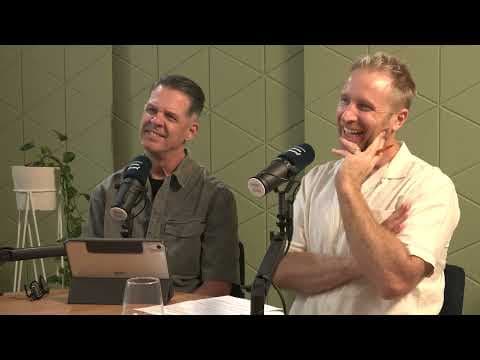
Watch the interview
In this video, we go one on one with our podcast guests.
Transcript
[BEGINNING OF RECORDED MATERIAL]
Janet: I think at this stage I'm encouraged to write more. When I first got the diagnosis, I kind of went, "Oh, just continue as is." Now that it's starting to bare its teeth, I'm thinking, "I really need to be getting on with this."
Hamish: I need to get these stories out.
Janet: Yeah, I need to get these stories out and even if I don't know once they're out, and I pick them up and go, "Oh, they're nice, who did that?" I'll be happy.
Hamish: Janet, welcome to Hold the Moment.
Janet: Thank you very much for having me.
Hamish: So, when we talk about looking after your brain, a lot of people think of different things, you can do puzzles, activities, memory games, but for you, it's creative writing.
Janet: It is indeed, yes, yes.
Hamish: What do you think it does for your brain?
Janet: When I write, mostly I don't like what I've written. I'm on a bit of a journey whenever I write. Apparently, when I was about three, I tried to stick together with glue, lined paper and write a story for my mum because she taught me to read, so I wanted to give it back, so I feel like I'm doing something for myself but also for other people. I'm enhancing my life. I'm doing something that I've loved since I was a tiny girl.
Jim: You haven't always been a writer. Tell us a little bit about your backstory because you'd always wanted to be a writer but that didn't happen till later on. So, what did you do prior to that?
Janet: I was a school teacher. The same mother that taught me to read at three said, "Don't be a writer, be a school teacher." I was a teacher, but then I went on and got involved in women's education in TAFE, empowering women to return to the workforce. Loved that. Just loved that. There's a feminist heart beating within and then went to Flinders University and got a PhD in Creative Writing and looked at writing as therapy.
Hamish: Why do you think writing works as therapy?
Janet: There are probably better people than I who've done more research on it, but I think it probably sparks different parts of the brain for different reasons, in different ways. And, I think that's why the people, and there haven't been many, so it's not a study and not a valid study, but the people I've worked with to write stories who've got dementia of various types, various kinds, they can achieve something and feel good about it and it's the feeling good, I think. That, I'm not sure whether I answered the question, but that's why.
Hamish: And so, has that background, is that knowledge, has that shaped what you've done since your diagnosis?
Janet: I thought I'd get this in somehow. When I got the diagnosis, I said, "I'm not sitting in the corner with a blanket over my knee." So, I did want to investigate going to people and talk about creative writing and I got very, very lucky. A young woman from Perth WA, Althea Gordon, had done something similar with theatre in her mother's rest home or yeah and she actually had... Althea had lots of people living with dementia doing lots of roles within that theatre production and when I met her online, through Dementia Australia, when I told her that I was a writer, she said, "Why don't we work with people who are doing, living with dementia? Can they write?" And I said, "I can't see why not." So, we put together a program. We put together a fund request from Dementia Australia which they very kindly helped us with. I went over to Perth to do the first creative writing. There were people in the room who couldn't believe they were there. "What am I doing here? How did I let Althea talk me into doing it?" You know, this kind of thing and by the end of the session, they were going away and saying, "Yes, write this." And yeah.
Jim: Was brain health something you'd ever thought about prior to your diagnosis?
Janet: Well, my PhD was in therapeutic writing so I wrote a memoir and I researched the origin and development of writing as a therapy and it has been researched widely, and yeah, in some detail that it can help in a whole range of situations with not just dementia, and certainly not dementia when it was first mooted as a possible therapy, so yeah.
Jim: And I think the good thing with that creative writing situation is it's ongoing, isn't it? You can keep those creative stories going so it's good for the brain, to be thinking it through and what a potential different ending is or...
Janet: Yeah.
Jim: It's ongoing.
Janet: I believe in that too, but I think it's also a connection. Very often we sit down with somebody new, a bit like we did last night Jim, and you know, what we don't explicitly say, "What's your story?" But we find ways to get a story out of each other. Sometimes subtle, and sometimes not so subtle and we'll go away with a story attached to the person we've just met and if we like the story, we continue to be friends. So, I think that, I don't know if this is going to sound a bit old-fashioned, but I think that we sat around the fire in caves and we told each other stories and it's the one true thing that has lived on.
Jim: I love that.
Janet: And even internet and other things...
Jim: There's not enough of it. It's the now. You know?
Janet: That's right. How did you guys, you tell stories, that's who, your, that's how you make a living.
Hamish: Oh, sometimes they make more sense than other types. Janet, you've got a pen-pal, called Ben.
Janet: Oh, yes, yes. My... yes, I have.
Hamish: And he played a role, didn't he, in sort of encouraging...
Janet: How did you find this out?
Hamish: We do research. People tell us stories, Janet.
Janet: Great.
Hamish: It's how we connect.
Janet: My friend Ben. Patrick first met Ben, introduced me, to Ben.
Hamish: Just explain who Patrick is because listeners don't know.
Janet: Oh, sorry. Patrick's my partner of 15 years or so, and yeah, so he's an actor and Ben's a playwright and producer. So, Ben moved to Melbourne, much to our chagrin, and he suggested one of us, suggested… there is dementia at work there, that we send each other a prompt every Saturday morning, and we post it to each other, the story that we get back and that was wonderful. That was, I was heaven on a stick for those nearly 12 months writing these stories backwards and forwards to Ben. And we were going to put them together and see if we could flog them around the place somewhere but Ben got the job. I mean, really.
Jim: That's selfish.
Janet: So, I worked on it, sort of for a while, and now I've decided to take some of my own stories from that effort and do some more and also look at stories that I wrote 10, 15 years ago and I want to get a collection together. It's getting to be time, and publish.
Hamish: Do you think your writing has changed?
Janet: I do actually, since the work that I did with Ben, definitely. His feedback was really good. His attention to detail was far supreme to mine and it was fun to work with somebody who took an interest and could make suggestions and I felt safe with. I've tried to join a couple of groups. Some, they're mostly good, but sometimes you find that they can, they want the story that they would've written… is, you know, is something that I sort of worry about a bit, so, yeah.
Jim: Do you find that the dementia and the diagnosis has impacted your writing in any way? Or has it encouraged you to write more? How, how did you find that?
Janet: I think at this stage, I'm encouraged to write more. I think when I first got the diagnose, 2022, diagnosis, I kind of went, "Oh, just continue as is." Now that it's starting to bare its teeth, I'm thinking, "I really need to be getting on with this." So…
Hamish: I need to get these stories out.
Janet: Yeah. I need to get these stories out and even if I don't know once they're out, and I pick them up and go, "Oh, they're nice, who did that?" I'll be happy. So, yeah. I feel as if it has made me more...
Jim: Determined.
Janet: Yeah, determined and yeah, and something like this is astonishing, you know, I've kind of got to do it now, it's on air. Well, maybe you'll cut it out, but.
Jim: We won't.
Janet: Yeah.
Hamish: Have you got a story you haven't written yet that you really want to write?
Janet: Yeah. There's a story of a 12-year-old girl. She’s, my granddaughter. She loves to read. We read together when she was very tiny and her dad, my son, read to her. I'd love to help her write her story without interfering or being a heavy-handed grandmother, but I would love to be able to see her life unfold and the story of her life and maybe share that.
Jim: That's a lovely thing, isn't it?
Hamish: The life down the track.
Janet: The life down the track. The life that I may not see. She's not... Yeah, I think she's turned 13. Yeah, she’s a teenager. Maybe in five years she won't have her Nanny T, that's me, but maybe she'll have a story that I wrote that isn't necessarily about her, but about us, or about growing up or about dementia. She will have that and I'll be gone, but I won't be.
Jim: It's a lovely legacy to leave behind, isn't it?
Janet: Yeah, yeah.
Hamish: So, you run creative writing workshops for people living with dementia. You've referenced that. You said there's prompts. There's sort of skeletons there. Paint by numbers, I think was the phrase you used. What happens in a session? How does it work?
Janet: Okay. We sit; we welcome them. They pretty much know what's coming. It's often their family member or carer has seen and learned about it and wants to join in. We go around and introduce ourselves and say why we're here and what sort of things we might expect. That's from my old days teaching women's studies and, you know, the women got to all share and talk in the round type of thing. And then I say, "Okay, the first thing we're going to is we're going to find a character. So just write down a sentence or two about somebody that you know. It could be anyone from any part of your life. Write something down about them." And then we stop, and they write and I might ask them to share a little bit and then we move on to "Where are they? You've got this character; they sound like fascinating characters. Here they are, they do podcasts. They're really interesting people to talk to, but what kind of situation are they in?" So, we, you know, and they come up with some really interesting thing. One guy sent in, the first one, sent them up in a rocket to the Moon, I think, or Mars, something like that. Wasn't quite expecting that, but he pulled it off. And we stopped again and then we let a few people talk about where the scene is. And then we talk about, "Well, what's the trouble? What's the block?" Every story has a need, a necessity, an issue. Sometimes, they're positive, you know, "How do I organise this birthday party?" Sometimes they're dire, and that gets interesting then. People might dredge up something, so you've got to be very careful at that point about looking after them while they're going through that. And we share again, and then we do the next step and then the next step. And yeah, we get them to read it out and then we ask them to go away and polish it and that kind of thing, which is why we produce the Creative Writers Guide. So, it's got the steps, very, very basic, but it's also got more prompts, and it's got ideas for how to keep going and maybe broaden the scope and whatever.
Jim: It's such a great concept because, it's social. So, they're getting together and then you're flexing that muscle. Your brain’s like a muscle so you're using that to think, and it's an enjoyable process so it ticks so many boxes.
Janet: And they're sharing with other people too and with people like them and when they find out that I've got dementia as well, they really respond to that, you know, they're not, they know that I'm somebody that's never going to judge them or talk down to them.
Hamish: Do you think it relaxes them?
Janet: Yeah, I think it might. I think it might, I don't know whether it relaxes me, Hamish but, you know, it relaxes, I think it might because we're all in this together.
Hamish: Obviously memory becomes a more complex thing for people living with dementia and often for stories, we rely on memories. What happens to people that take these workshops? Do people find memories that they haven't thought of in a while? What happens for people with those backstories, that hinterland?
Janet: I'm going to tell you one of my favourite stories. It was the last writing workshop in Adelaide and Patrick helped organise it through a friend of his who's also an actor and her mother-in-law was diagnosed with dementia. And Eliza, the woman I'm talking about, said to her mother, "Oh, you know, Patrick, Patrick's got this partner and she's got dementia and she's running this writing workshop and would you like to go?" "No." And so, Eliza and her daughters and her son, her husband, just tried to get her there and she was going, "Oh, I don't, I'm not interested in writing a story, no, no, no idea." Anyway, somehow or other, one of the granddaughters managed to get her in the car and bring her along to the session, just gently, lovingly and when I did the round, like I talk about, you know, who you are and why you're here, she said, "I'm not sure why I'm here." Things to this effect. "I'm not sure why I'm here. My granddaughter told me to come. The family's been telling me to come along, so here I am." And I just welcomed her like I welcomed everybody else and then we went through the process of the five steps and at the end, we get them, if they are happy to read their stories and she read her story and it was so good and she was beaming and we got the message a couple of days later that that night she went home and wrote three more.
Jim: Wow.
Janet: And I mean, I was a bit teary about that, and I think to answer your question, that's it. If I can inspire somebody to do something that she gets great pleasure from.
Jim: The wonderful thing is there's no right and wrong with creative writing. Doesn't matter if it's jumbled up, it can be anything, really. It's like my grandkids, when I do a bedtime story with them, they will, eight times out of 10, want a made-up story from me rather than the story read from the book. So, you know, there is that aspect to it. There's no right or wrong to any of it.
Janet: No, no.
Jim: You can just make it up as you go along.
Janet: Exactly, exactly, and you know, sometimes it works if you want to get it published and sometimes it doesn't, and sometimes it works in a workshop and sometimes it doesn't but it's the act as much as the outcome too that we also focus on, you know? It doesn't matter if you get a story collection. People, "Have you had fun? Have you relaxed? Have you met somebody that's interesting to talk to? Have you enjoyed yourself?"
Hamish: Can you give listeners a prompt? What's one of the prompts you would give?
Janet: I don't... Oh, no, I don't. I just get them to find a character.
Hamish: Okay.
Janet: So, if I was...
Hamish: Help us, help us find a character.
Janet: Well, that's up to you. I'm not going to give you the character because what was your character?
Jim: Okay.
Janet: So, just give me a character that you, either from your past, that you know is an interesting person, or a character that you'd like to see or create and just give me a sentence, one sentence about that character.
Hamish: Off you go.
Jim: Oh, mine was the postman. He used to come to the end of the street, and we would talk and he'd be telling me about his deliveries that day and that sort of thing when I was young, so I'm thinking of him. How about you?
Hamish: Was there one box in the delivery bag that day that he didn't have an address for?
Jim: No, but...
Hamish: But he had to deliver it?
Jim: Ah.
Janet: Oh…
Jim: Is this the, the story developing right now?
Janet: I think my work here is done.
Jim: Yeah. Very clever, this one.
Hamish: Janet, thank you very much.
Jim: Thank you, it's been a pleasure. Thanks for coming in.
Janet: Thank you both so much, it's just been a delight.
Jim: Hold the moment is a podcast from Dementia Australia produced by Deadset Studios.
[Title Card:
To listen to the full podcast episode visit:
Dementia.org.au/podcast
Dementia Australia Logo
End of Title Card]
[END OF RECORDED MATERIAL]
Ask Us Anything
Transcript
[BEGINNING OF RECORDED MATERIAL]
Kevyn: Hello, my name is Kevyn. I am a First Nations advocate with Dementia Australia. These lands in which we are meeting are many countries filled with languages similar, and different. For more than 50,000 years, we have come together to trade knowledge, to learn, and to teach. Today, we joined to keep up that tradition. So, with that in mind, we now pay our respects to the Traditional Owners, to Elders past and present to those First Nations people joining us here today. Welcome and thank you.
Jim: Most of us tend to think about keeping our bodies healthy, and the importance around that. But what about our brains? Hi, I'm Jim Rogers, and this is Hold the Moment. Dementia Australia's award-winning podcast, which gives you real stories, insights, and support, when dealing with dementia. On our 'Ask Me Anything' episodes, you send us questions that you'd like to be answered, about living well, with dementia. Ange, from Brisbane has a question about brain health.
Ange: Hi, I'm Ange. I'm in Brisbane, and I keep hearing things, like reducing stress and exercising makes a difference. But what's the actual evidence that stuff works? Until we find a cure, can we actually reduce the risk of getting dementia?
Rose: Here's Rose Capp. She's the Policy Advisor at Dementia Australia and the author of 'Demystifying Dementia.'
Rose: So firstly, it's really great that you're hearing those messages Ange, about risk reduction, and the answer is a resounding yes. There's really good, clear evidence that there are things that we can do to reduce our risk of developing dementia. So, when we talk about risk factors for dementia, we tend to categorise them into two main groups. So, there's the things called 'non-modifiable' risk factors. So those are things that as it sounds like we can't do much about. That's our age and genetic predisposition. But then there's things called 'modifiable risk factors’, and these are the things that we can actually take action about. So, these are things to do with our general health, and our lifestyle. So, things like, maintaining a healthy weight and a healthy diet. Moderating our alcohol consumption. If we've got conditions like diabetes, and high cholesterol, high blood pressure, managing those really well. Not smoking, which we all know is something that’s a risk factor for many diseases. If we have hearing and vision changes, we need to get those things checked out. And other things like, managing depression and avoiding things like social isolation. So really here the message is that, all the things that we do for our general health, and particularly our cardiovascular, or our heart health, they're also really good things for our brain health. So, we can do things like, exercise regularly. We know we should be doing that, but we don't always do it. And the general rule of thumb is something like 30 minutes of brisk exercise a day, five times a week. We need to stay, what we say cognitively and socially active. So, being socially connected is a really important part of reducing your risk of developing dementia. We know that being isolated can increase that risk. And the important thing here too, is that a lot of these risk factors develop in mid-life. So, we start sort of thinking about dementia as we get older, but actually what we need to do is take action about these things, in middle age. So that's a really important message. Start thinking about these earlier rather than later and make some changes. And here's a good news story, Ange. A recent study in the Lancet, which is one of the premier medical journals in the world, actually showed, that 45% of all cases of dementia, globally, could be prevented if we did something about these risk factors. So that's a pretty extraordinary statistic. That's nearly half of all cases could be prevented. And it's really inspiring. It's a positive message because it means that we can do something and also governments can do something in terms of public health messaging. And just a final thought too, one of my favourite recent findings in research is that dancing, is actually the most effective activity in terms of dementia risk prevention. And really that makes sense when you think about it. because dancing involves physical movement. You've got to move your feet, you've got to think about where you're putting your feet, so, it's got some cognitive stimulation in there. And of course, it's a social activity. So generally, you’re dancing with other people, or in a group. And Dementia Australia's honorary medical advisor, Professor Michael Woodward, has got some really appealing advice on this score. He says, "Get your dancing shoes on and get out there and try it."
Jim: Maria sent us in this question via Facebook. She wants to know, "Does mild cognitive impairment become dementia?"
Rose: I get this question quite a lot when talking to people in the community, Maria. So thanks for that, it's a really important question. And it's a really common concern for a number of people. We can think about mild cognitive impairment as changes in thinking and mood. So, these are changes that are quite subtle sometimes. So they're not as significant as the kind of changes that you might experience if you're living with dementia. It's also important to say here that while we describe this condition as 'mild' for someone who's experiencing these changes, that can be quite a significant thing. So mild cognitive impairment, it is a significant risk for developing dementia. Someone with mild cognitive impairment, is three to five times more likely to develop dementia, and particularly Alzheimer's disease. The important thing here to emphasise though, is that it does not mean that you’ll go on to develop dementia. So, I really want to emphasise that point. While the risk is higher, there's no guarantee that you will actually go on to develop dementia. In fact, some people live with mild cognitive impairment, their symptoms don't change. Some people can even improve over time. But that also reinforces the point about looking at other risk factors to reduce the general risk of developing dementia. So, if you have been diagnosed with mild cognitive impairment, you can think about some of those other risk factors in order to reduce your general risk of developing dementia. The other thing worth pointing out too, is that Dementia Australia has some really useful resources about mild cognitive impairment. We have a website page. And we also have a free program called ‘Mild Cognitive Impairment: Thinking Ahead'
Jim: If you've got a question, you can also call the free National Dementia Helpline on 1800 100 500. Dementia Australia's trained advisors are available 24 hours a day, every day of the year. And look out for more episodes of Hold the Moment. This episode was produced by Deadset Studios for Dementia Australia.
[END OF RECORDED MATERIAL]
You asked, we answered
This episode answers questions about mild cognitive impairment and whether risk reduction measures actually work.
Rose, Policy Advisor and Dementia Australia, offers practical and compassionate strategies.


About the podcast
Hold the Moment is an award-winning podcast from Dementia Australia full of real stories about life after a dementia diagnosis.
Season three dives into the topics that can be hardest to talk about, with compassion, practicality and a unique sense of hope.
Subscribe to the podcast
You can subscribe to the Hold the Moment Podcast on your favourite platforms, including:
 Apple Podcast
Subscribe to Hold the Moment on Apple Podcasts.
https://podcasts.apple.com/au/podcast/hold-the-moment/id1761945729 Spotify
Subscribe to Hold the Moment on Spotify.
https://open.spotify.com/show/2flVINrLfqr23P3V6XwBLS YouTube
Subscribe to Hold the Moment on YouTube.
https://www.youtube.com/playlist?list=PLAwhBH-4GO5jz9QVtKcOwCWZs6i39o5Ya
The National Dementia Helpline
Free and confidential, the National Dementia Helpline, 1800 100 500, provides expert information, advice and support, 24 hours a day, seven days a week, 365 days a year. No issue too big, no question too small.